Posted on

How to choose kidswear sizes

Compare supplier size labels, garment measurements and international reference sizes before buying children’s clothing.

Start with the product’s own measurements

Our suppliers confirm that height-based size labels refer to the child’s recommended height. For example, 120 cm is a recommended height label, not a garment length or a US age size. Choose by your child’s height and keep any original age-only label as supplied. Individual body proportions and fit preferences can vary.

Measure the same way

Lay a similar garment flat. Compare chest width, garment length, waist and inseam when those measurements are provided. A flat width is different from a full circumference. Use consistent units; one inch equals 2.54 centimeters.

Use international sizes as a reference

Our international size table is an approximate comparison, not a promise that every supplier uses the same fit. Garment measurements, when supplied, are an extra fit reference. They are not required to understand a supplier-confirmed height label. Do not invent a country conversion.

Before adding to your cart

Check color, supplier size, included pieces and any available fit notes. Choose the actual product options; the order retains that supplier size and variation SKU.

Reviewed 19 November 2026. Guidance is based on the store’s current workflow; supplier-specific facts must be checked on the product.

All guides & advice

Posted on

How to prepare a mixed kidswear purchase list

Choose styles, colors, sizes and quantities, then send a mixed kidswear purchase list for a wholesale quotation.

Choose the actual assortment

You can select different styles, colors and sizes instead of buying a large quantity of one variation. Add each required variation to your cart and update its quantity.

Review selected items

Select the cart items you want included. Check sizes, colors and quantities before opening “Send us your cart”. The saved list identifies each variation by its SKU.

Send the list for a quotation

Provide your name, delivery country and at least one contact method in the purchase-list form. Add any restocking or assortment questions. Sending a list does not create a paid order or an ERP purchase instruction.

Confirm terms before paying

A larger mixed order needs an agreed quotation covering availability, product prices, freight and payment terms. There is no automatic US$200 discount. Do not transfer money until the seller has confirmed the payment details through a verified channel.

Reviewed 19 November 2026. Guidance is based on the store’s current workflow; supplier-specific facts must be checked on the product.

All guides & advice

Posted on

How kidswear shipping costs are calculated

Understand separate product and freight prices, the combined-weight allowance and destination-based shipping estimates.

Product prices and shipping are separate

There is no order-value free-shipping threshold. The delivery destination and chargeable shipment weight determine the shipping amount; a currency or language selection does not determine your destination.

Combined weight plus twenty percent

We add the selected item weights, including their quantities, then increase that total by 20% for the estimate. For example, 200 g plus 300 g becomes 600 g for calculation. The original product weights remain unchanged.

Destination and carrier rules

The route’s weight band, minimum chargeable weight and handling fee apply. Japan uses its listed first-weight and additional-weight steps. Listed European routes add EUR 5 to the combined shipment. This is a merchant estimate, not a statement that every shipment has been weighed.

Confirm your delivery address

Use the cart delivery estimator and confirm the shipping address at checkout. Canada and Australia currently need a postal-zone quotation. Missing weights, remote addresses and shipments exceeding a route limit may also require a quote. An unavailable rate does not mean free shipping.

Reviewed 19 November 2026. Guidance is based on the store’s current workflow; supplier-specific facts must be checked on the product.

All guides & advice

Posted on

Planning your first kidswear assortment

A practical checklist for a first mixed kidswear order: size coverage, product facts, quantities and replenishment.

Plan around your own customers

List the sizes, garment types, season and price range your customers actually need. If you do not yet have sales data, treat your first assortment as a test; there is no universal best-selling size ratio.

Check facts before committing

Check the available garment measurements, supplier size labels, fabric composition, included pieces and care instructions. Missing data is a question to resolve, not proof of a product feature or certification.

Choose quantities deliberately

Start with quantities appropriate to your budget and expected demand. Compare the total of products and shipping rather than product prices alone. Do not assume that a larger order always reduces the shipping charge.

Keep the variation references

Save the product and variation SKUs used in your list. They help distinguish colors and sizes for future discussions. Availability and replenishment lead times need confirmation before each order.

Reviewed 19 November 2026. Guidance is based on the store’s current workflow; supplier-specific facts must be checked on the product.

All guides & advice

Posted on

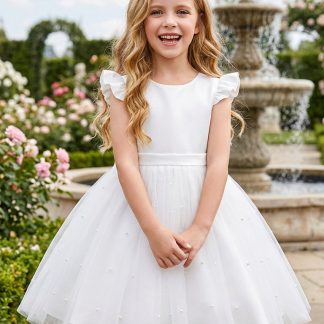
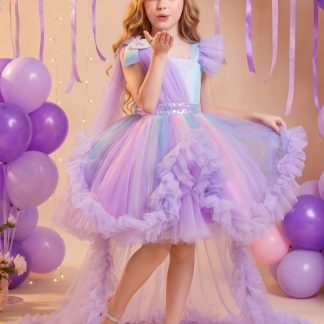
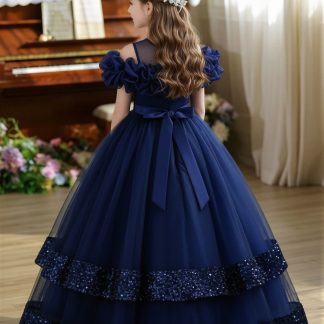
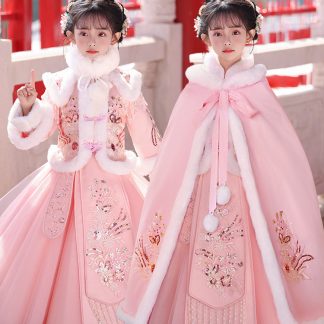
Does a girls’ dress include the accessories in the photo?

Check whether the selected dress option includes a crown, headpiece or petticoat before you add it to your cart.

Check the selected option, not just the main photo

A dress photo may show styling accessories. Select the exact colour and configuration and read its option label. A dress-only option and an option explicitly described as including a crown or petticoat are different purchases.

Keep different configurations separate

Some supplier options combine colour, sleeve style and accessories. Add each configuration separately to your cart. The saved variation and SKU identify what you selected; do not assume every colour includes the same accessories.

What to check before ordering

Check the item description, the selected option and the included-piece information. A crown is different from a headband; a petticoat is different from the dress lining. If the export does not say an accessory is included, do not assume that it is.

For mixed wholesale orders

Keep the accessory configuration with each line in your purchase list. If you need clarification, mention the product and variation rather than only sending the main photo. Final included pieces should be confirmed before a larger order.

Reviewed 19 November 2026. Guidance is based on the store’s current workflow; supplier-specific facts must be checked on the product.

All guides & advice

Posted on

Understanding dress fabric, lining and care labels

Learn the difference between a fabric name, fibre composition and lining so you can read a kidswear product description accurately.

Read fabric name and fibre separately

Tulle, mesh and chiffon describe fabric types. Polyester, cotton, viscose and elastane describe fibres. A tulle dress should not automatically be described as cotton or as a particular polyester percentage.

Keep outer fabric and lining separate

A main fabric listed as 90% polyester does not explain the remaining 10%. A cotton lining does not mean that the whole dress is cotton. Read each layer and its supplied percentage separately; missing percentages are not filled in by assumption.

Use the care label attached to the garment

Our suppliers confirm that the garments have care labels. Follow the label for washing, drying and ironing. Where the export does not include those instructions, we do not invent a wash temperature or a machine-wash claim.

Ask a specific product question

If fibre content or lining is important for your purchase, identify the exact item and option. A fabric description alone does not prove softness, stretch, allergy suitability or an overseas certification.

Reviewed 19 November 2026. Guidance is based on the store’s current workflow; supplier-specific facts must be checked on the product.

All guides & advice

Posted on

A practical checklist for a mixed dress order

An illustrative workflow for choosing several dress styles, sizes and configurations without losing track of the selected variations.

This is a planning example, not a customer testimonial

Imagine choosing three styles: one dress-only option, one option explicitly including a crown, and a two-piece outfit. This is an example of organising an order, not evidence of a completed customer purchase or a recommended size ratio.

Choose the options line by line

For each style select the actual colour or configuration and the supplier’s height or original size label. Add it to the cart. If you need a second size, select it separately and add another line rather than putting all sizes in the message field.

Review quantities and delivery costs

Adjust quantities in the cart and select the lines you want to buy or send for quotation. Compare the combined product price plus delivery to your destination. There is no automatic US$200 discount and no order-value free-shipping threshold.

Save a useful purchase list

Open “Send us your cart” after updating selections. Provide the required contact details and delivery country, then add any questions about included pieces or restocking. The list preserves the variation SKUs; submitting it is not a payment or an ERP order.

Reviewed 19 November 2026. Guidance is based on the store’s current workflow; supplier-specific facts must be checked on the product.

All guides & advice