Posted on

How to choose kidswear sizes

Compare supplier size labels, garment measurements and international reference sizes before buying children’s clothing.

Start with the product’s own measurements

Our suppliers confirm that height-based size labels refer to the child’s recommended height. For example, 120 cm is a recommended height label, not a garment length or a US age size. Choose by your child’s height and keep any original age-only label as supplied. Individual body proportions and fit preferences can vary.

Measure the same way

Lay a similar garment flat. Compare chest width, garment length, waist and inseam when those measurements are provided. A flat width is different from a full circumference. Use consistent units; one inch equals 2.54 centimeters.

Use international sizes as a reference

Our international size table is an approximate comparison, not a promise that every supplier uses the same fit. Garment measurements, when supplied, are an extra fit reference. They are not required to understand a supplier-confirmed height label. Do not invent a country conversion.

Before adding to your cart

Check color, supplier size, included pieces and any available fit notes. Choose the actual product options; the order retains that supplier size and variation SKU.

Reviewed 19 November 2026. Guidance is based on the store’s current workflow; supplier-specific facts must be checked on the product.

All guides & advice

Posted on

Does a girls’ dress include the accessories in the photo?

Check whether the selected dress option includes a crown, headpiece or petticoat before you add it to your cart.

Check the selected option, not just the main photo

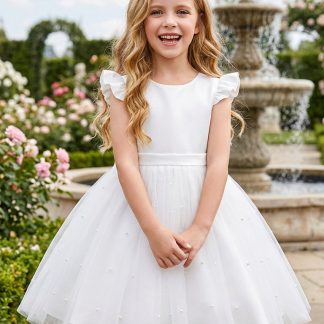
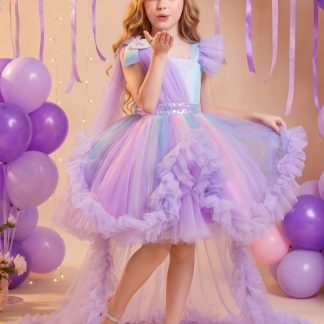
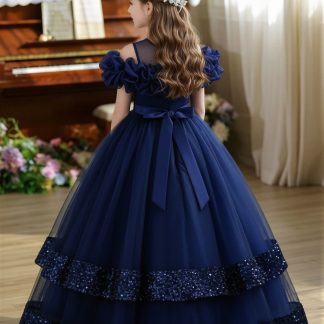
A dress photo may show styling accessories. Select the exact colour and configuration and read its option label. A dress-only option and an option explicitly described as including a crown or petticoat are different purchases.

Keep different configurations separate

Some supplier options combine colour, sleeve style and accessories. Add each configuration separately to your cart. The saved variation and SKU identify what you selected; do not assume every colour includes the same accessories.

What to check before ordering

Check the item description, the selected option and the included-piece information. A crown is different from a headband; a petticoat is different from the dress lining. If the export does not say an accessory is included, do not assume that it is.

For mixed wholesale orders

Keep the accessory configuration with each line in your purchase list. If you need clarification, mention the product and variation rather than only sending the main photo. Final included pieces should be confirmed before a larger order.

Reviewed 19 November 2026. Guidance is based on the store’s current workflow; supplier-specific facts must be checked on the product.

All guides & advice

Posted on

Understanding dress fabric, lining and care labels

Learn the difference between a fabric name, fibre composition and lining so you can read a kidswear product description accurately.

Read fabric name and fibre separately

Tulle, mesh and chiffon describe fabric types. Polyester, cotton, viscose and elastane describe fibres. A tulle dress should not automatically be described as cotton or as a particular polyester percentage.

Keep outer fabric and lining separate

A main fabric listed as 90% polyester does not explain the remaining 10%. A cotton lining does not mean that the whole dress is cotton. Read each layer and its supplied percentage separately; missing percentages are not filled in by assumption.

Use the care label attached to the garment

Our suppliers confirm that the garments have care labels. Follow the label for washing, drying and ironing. Where the export does not include those instructions, we do not invent a wash temperature or a machine-wash claim.

Ask a specific product question

If fibre content or lining is important for your purchase, identify the exact item and option. A fabric description alone does not prove softness, stretch, allergy suitability or an overseas certification.

Reviewed 19 November 2026. Guidance is based on the store’s current workflow; supplier-specific facts must be checked on the product.

All guides & advice